by Kristin Holt | May 7, 2017 | Articles
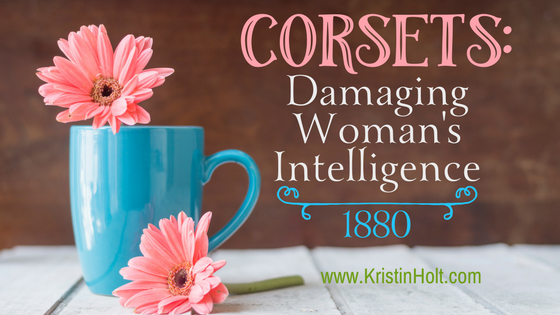
Dr. Richardson, a London physician, spoke against corsets (tight lacing) and the damage thereby inflicted upon women’s intellect. This article was syndicated from New York Times and appeared in Kansas Farmer on May 5, 1880.
by Kristin Holt | May 4, 2017 | Articles
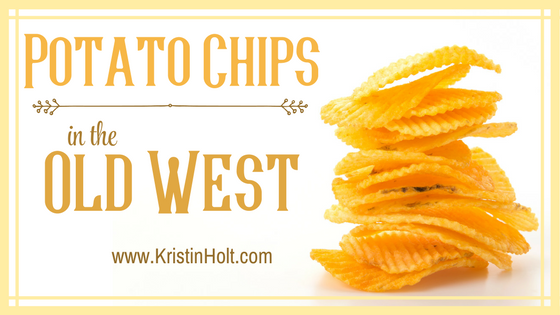
Potato Chips are an American (and world-wide) favorite. Invented by accident–or should we say “accidentally-on-purpose”?–these potato crisps first graced the table of an elite resort in 1853 in upstate New York. News of the “invention” spread far and fast, and quickly became part of every homemaker’s repertoire, available on grocer’s shelves, served in restaurants, peddled by salesmen, and inspired further inventions.
by Kristin Holt | Mar 11, 2017 | Articles
The decade of the 1880s proved among the most disastrous, desperate, life-threatening (and life-taking)–as winter in North America was at an extreme, the whole decade long. Climatologists have theories we understand today, but were unknown to our Victorian American ancestors. If you read a fictional book set in the 1880s, that touches on a mild winter, be surprised. Today, March 11th, is the anniversary of “the big one”.
by Kristin Holt | Mar 2, 2017 | Articles
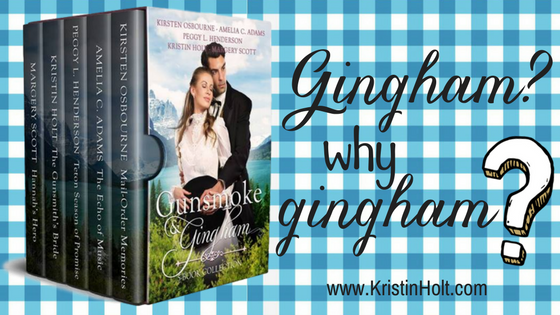
In the 19th century American West, Gingham was more than checked fabric made of cotton–it was also striped. Any woven cotton cloth made of pre-dyed alternating threads (plaid, striped, or checked) was called gingham. Why would pioneers (or frontiersman, or Old West women) select gingham? What made this fabric practical? Why would we name an anthology with Gingham in the title?
by Kristin Holt | Jan 11, 2017 | Articles
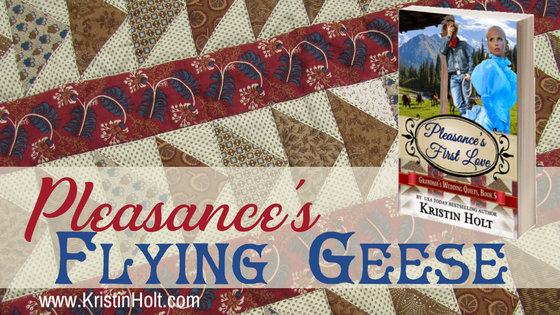
As each book in Grandma’s Wedding Quilts series has its own quilt pattern, I share some historic tidbits about the meaning behind the Flying Geese quilt blocks. Pleasance’s quilt, Flying Geese, to her 10-year-old mind wasn’t fancy enough, but by the time she marries and better understands the value of Grandma Mary’s gift to her, the significance of this quilt pattern (and her grandmother’s work) means a good deal to her. I share quotes from the book, beginning and end, with Pleasance’s attitudes about her very plain quilt pattern.