by Kristin Holt | Sep 17, 2016 | Articles
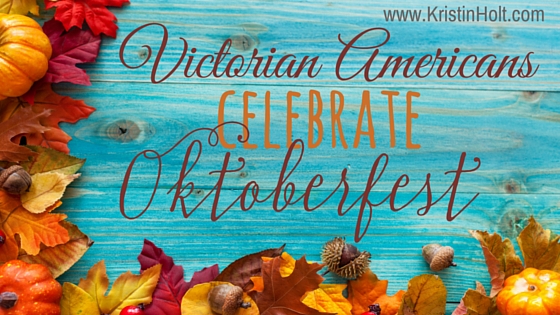
Oktoberfest is a multi-national celebration of German culture, held annually in Munich, Germany and in many other locations worldwide. German immigrants to the United States before and during the Victorian Era brought the custom with them. The sixteen-day festival of parades, music, food, and folkloric dancing begins on the third Saturday of September each year. The 2016 holiday begins today, September 17, 2016.
by Kristin Holt | Aug 23, 2016 | Articles
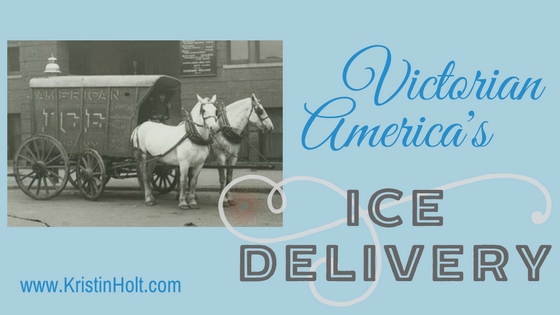
Victorian Americans needed ice–for home use, through delivery businesses, on a commercial scale (to keep food from spoiling at the grocery and in railroad transportation). Ice houses were built all over the United States from the independent family’s ice house on their property to the enormous commercial Swift & Co. Ice House storing 60,000 tons annually. Ice harvesting occurred in January and February and kept in storage facilities until the following winter by applying ingenuity, science, and hard work. Men used saws, horse-drawn sleighs, and the strength of their own backs to harvest the cash crop each winter. This article contains vintage photographs, newspaper ads, and science info of the Victorian era.
by Kristin Holt | Aug 11, 2016 | Articles
Harper’s Bazar (also spelled ‘Bazaar’, later on) is a Ladies Magazine founded in the Victorian Era. This article highlights bathing costumes (swimming suits) featured in Harper’s Bazar from the 1870s through early 1890s.
by Kristin Holt | Jun 2, 2016 | Articles
Victorian Americans wore ingenious devices beneath their clothing to hold their stockings (hose) up. Because garters / hose supporters aren’t as romantic and enticing as corsets or even Union Suits, I’ve yet to see a fictional piece of the era that so much as mentions them. This article contains images of items offered for sale in the 1895 and 1897 editions of the Sears Roebuck & Co. and Montgomery Ward & Co. Catalogs, as well as price comparisons from then to now. Such contraptions were worn by men, women, children, and even babies. Who knew?
by Kristin Holt | May 27, 2016 | Articles
When did the term “O.K.” or “okay” find its way into common use in American English? Is it incorrect (and inaccurate) to use “okay” in 19th century fiction? What if it’s spelled “O.K.”? What does O.K. stand for, anyway? I’ve provided numerous historical newspaper articles and snippets showing the etymology and proving one of the spellings (O.K.) is highly accurate in the 19th century, but the other (okay) is not.