by Kristin Holt | Jun 18, 2018 | Articles
While researching dentistry in 1890 for an accurate setting for my title, Isabella’s Calico Groom, I was quite surprised by how advanced and “modern” (by today’s standards) dentistry was. Significant advances in dentistry had occurred in the previous decades, making dentistry truly “modern” compared to patients’ previous experiences. The sheer quantity and magnitude of improvements in dentistry qualify dentists of the 1890s to claim “Modern Dentistry” in their advertisements.
by Kristin Holt | Jun 14, 2018 | Articles
Nineteenth Century American women who desired an advanced education (and to work as a professional) fought an uphill battle. As late as the final decade (1890s) cultural beliefs demanded “good” women made home a bit of heaven on earth, toiled only as a help-meet to her husband, and found all the joy and satisfaction there she could possibly need. Historical sources underscore this dated belief system, and set the stage for the challenges faced by my character Dr. Isabella Pattison, DDS, in Isabella’s Calico Groom (within Calico Ball: Timeless Western Collection).
by Kristin Holt | Apr 7, 2018 | Articles
Coffee Cake… Yummm! Today, April 7th, is National Coffee Cake Day! Do you like the crumble-topped kind, varieties with coffee in the cake, or simply cake meant to be enjoyed with a cup (or five) of coffee? Come see the recipes and methods our Victorian ancestors found tasty enough to keep.
by Kristin Holt | Feb 26, 2018 | Articles
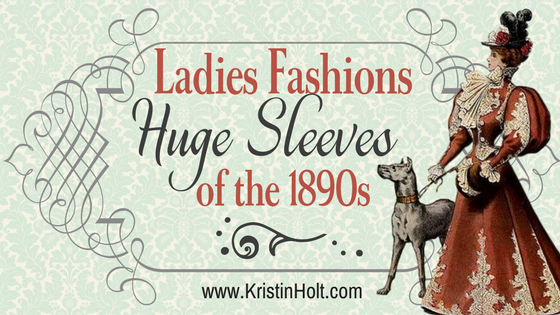
19th Century Ladies Fashions included gigantic sleeves known by many names: Leg of Mutton, Marquise, Balloon, etc. Highly fashionable, women wore them to work at home, to “walk out”, to sit for photographs, and on their wedding days. Highly fashionable for a period of time in the 1890s (through the turn of the century), they’ve returned at least twice: mid 1980s and in 2016. A favorite? You decide.
by Kristin Holt | Feb 14, 2018 | Articles
It’s Valentine’s Day! Millennials (and old folks like me) understand society’s expectations of how committed couples acknowledge Valentine’s, and how expression of love is done (or we believe should be done). But what about our Victorian ancestors?
How did Victorian Americans say “I love you”? …Or, did they?
Did advice of the era shed light on such matters?