by Kristin Holt | May 15, 2016 | Articles
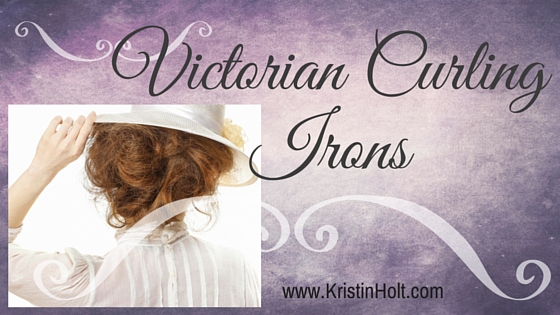
American women in the late Victorian Era often cut and curled bangs at the forehead. Many photographs (cabinet cards) show this hairstyle, with the rest being upswept and pinned, as women grew their hair to amazing lengths–all except those stylish bangs. If the curls about the forehead were not a hair piece (purchased by mail), then they most often required a curl. Victorian curling irons (their prices, designs, and heating methods) might surprise you–after all, it’s not (only) like Laura Ingalls Wilder described in her fictionalized memoirs of coming of age and cutting her hair in this style.
by Kristin Holt | May 12, 2016 | Articles
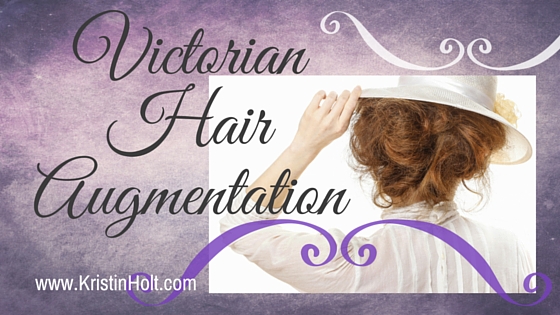
Victorian-era Americans (both men and women) had ready access to commercially prepared human hair pieces. Women wore them to achieve the style of the day without cutting their hair or to achieve the fullness and length considered stylish and desirable when their own hair couldn’t grow to such amazing lengths. Mail-order catalogs of the period provided a wide variety of products, appealing to men and women alike, including products purported to restore gray hair to the color of youth.
by Kristin Holt | Apr 21, 2016 | Articles
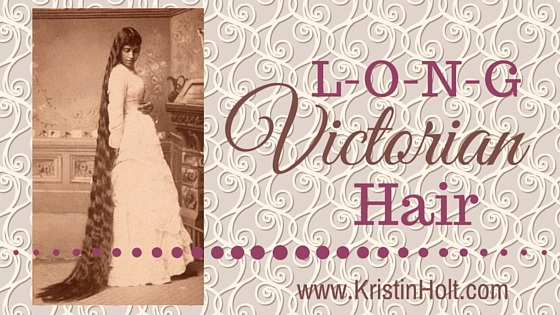
Victorian Era Women seldom trimmed their hair, allowing it to grow to incredible lengths. As styled, it often wrapped high in coiffures of twists, curls, braids, loops, pompadours, buns, knots, and more. Once you see the tremendous lengths of photographed ladies’ hair, you’ll understand why women (from the moment they cast off short dresses of girlhood) wore their hair up. It’s no surprise commercially prepared products catered to a woman’s desire to grow her hair to great lengths.
by Kristin Holt | Apr 15, 2016 | Articles
In my recent post about The Proper (and safe) Way to Terminate a Victorian American Courtship because we all know the threat of a suit of Breach of Promise was too great, a quote by the Reverend George W. Hudson in his 1883 book sounded rather scandalous. The good reverend actually said “making love”–and he didn’t mean in a sexual way. It’s essential to note that the term had a very different meaning in the 19th Century and early 20th Century than it does now.
by Kristin Holt | Mar 17, 2016 | Articles
Our 19th Century (Victorian) American ancestors celebrated St. Patrick’s Day in many ways that mirror current / modern observations. The ‘holiday’ has morphed a bit, too, as is to be expected over a 150 to 100 year time span. Many of the 19th century modes of celebration have disappeared and are no longer in vogue.