by Kristin Holt | Jul 11, 2017 | Articles
We know original Coca-Cola (debuted 1886) did have cocaine in it–and not “a trivial amount”. The product began as a replacement for coca wine (just what it sounds like), when temperance laws outlaws alcohol, and Pemberton needed a replacement vector for his coca leaves. Looking back at vintage sources, it’s easy to see when cocaine was removed from Coca-Cola, and how the owners ensured their not-yet-trademarked product remained protected. Numerous credible scientists analyzed the syrup (from various retail locations), swearing to Coca-Cola’s freedom from cocaine, but the attacks didn’t stop overnight. Decades later, Coca-Cola maintained its status as a substance-free “refreshing drink”, a 180° switch from its Patent Medicine beginning.
by Kristin Holt | Feb 18, 2017 | Articles
Though American Victorian women took to the safety bicycle in droves, newspaper and public notices of the day show that women on bicycles were not widely accepted. A public service announcement from The Woman’s Rescue League proclaimed that women on bicycles were immoral, vulgar, disease-ridden, and unwomanly. Such attitudes didn’t keep women from their bicycles, and with the advent of the new Safety Bicycle, women such as my character, Sophia Sorensen (Sophia’s Leap-Year Courtship), took to cycling and had no interest in forfeiting the exercise and transportation.
by Kristin Holt | Feb 15, 2017 | Articles
As with virtually all activities and behaviors in the Victorian Era, American society developed a set of etiquette rules governing bicycling. One might suppose this list is about signalling (hand gestures) or riding in pairs for protection. You might be quite surprised to see the lengthy list of do’s and dont’s [sic] offered up in a vintage newspaper article from 1895, and in various magazines of the day.
by Kristin Holt | Nov 22, 2016 | Articles
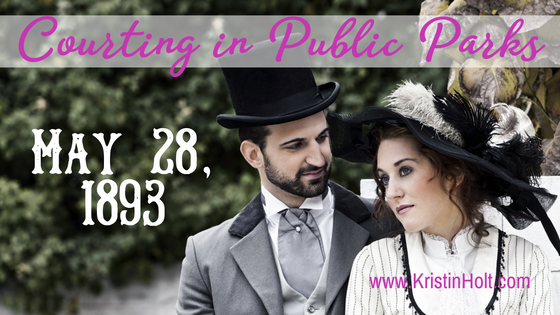
In 1893, expectations surrounding courtship made it improper for a couple to show affection for one another in public. Baltimore apparently outlawed simple signs of affection in their city parks, raising the alarm in New York City where Central Park was a key location for courting couples to go about their courtship (which included simple things like sitting on a bench together, a man’s arm about his sweetheart’s waist). This article includes a newspaperman’s interview with two different Central Park policemen, one who favored strict laws prohibiting such displays of affection and one who was most tolerant. Step back in time and enjoy an entire vintage newspaper article and historic images of Central Park in the late 19th century.

by Kristin Holt | Oct 29, 2016 | Articles
Victorian-era Americans enjoyed holidays–filled with patriotism, fun, remembrance, religion, and fashion. Halloween began far earlier than the 19th century, when All Hallows Eve was a sacred, religious observation. Come catch a glimpse of our Victorian American ancestors’ fun with Halloween: “Hallowe’en Cake” and its fortune telling methods, parlor games filled with superstition, phrasing for party invitations, historical cabinet cards of Victorian Halloween costumes, and more!