by Kristin Holt | Jun 14, 2016 | Articles
Victorian Americans not only observed Flag Day on June 14th–they created it. Flag poles on government property sported the star spangled banner. Private citizens raised the flag, draped patriotic bunting over porch rails and fences, and attended military parades. Most of all, they recalled what the American flag stands for, its symbolism, and the meaning of patriotism. The practice of observing Flag Day on June 14th, annually, had been in practice since the 1870s and become widespread, but it took well into the 20th century for a President of the United States to make the day a federal holiday.
by Kristin Holt | Jun 8, 2016 | Articles
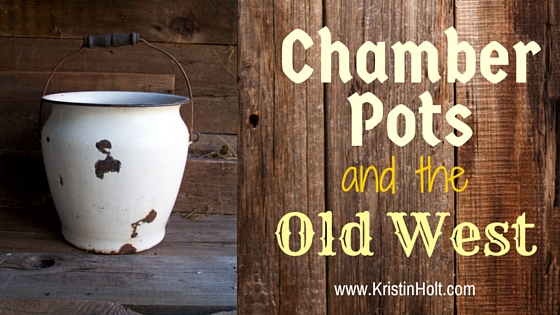
Chamber pots were a necessary accompaniment to the outhouse (a.k.a “the necessary”). Illness, foul weather, the elderly, emergencies–all credible reasons to need a ready source of relief. It’s one of the least glamorous aspects of everyday life in Victorian America. Who knew such fancy chamber pots could be purchased through Sears Roebuck & Co. catalog?
by Kristin Holt | Jun 5, 2016 | Articles
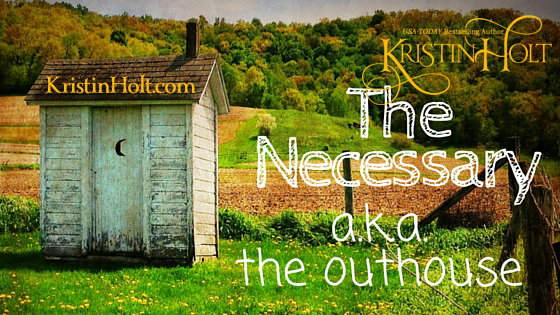
The necessary (a.k.a. outhouse) had many Victorian Era-appropriate euphemisms: Quincy, small room, washroom…and was replaced with modern indoor plumbing both very early (1820’s at the White House) and very late (1950’s) in rural America. What did homeowners do when the necessary filled up? (ewww!) When was toilet paper invented? Why did outhouses have more than one seat?
by Kristin Holt | Jun 2, 2016 | Articles
Victorian Americans wore ingenious devices beneath their clothing to hold their stockings (hose) up. Because garters / hose supporters aren’t as romantic and enticing as corsets or even Union Suits, I’ve yet to see a fictional piece of the era that so much as mentions them. This article contains images of items offered for sale in the 1895 and 1897 editions of the Sears Roebuck & Co. and Montgomery Ward & Co. Catalogs, as well as price comparisons from then to now. Such contraptions were worn by men, women, children, and even babies. Who knew?
by Kristin Holt | May 30, 2016 | Articles
The history of America’s Memorial Day, sometimes called Decoration Day, is rooted in the American Civil War.