by Kristin Holt | Aug 20, 2016 | Articles
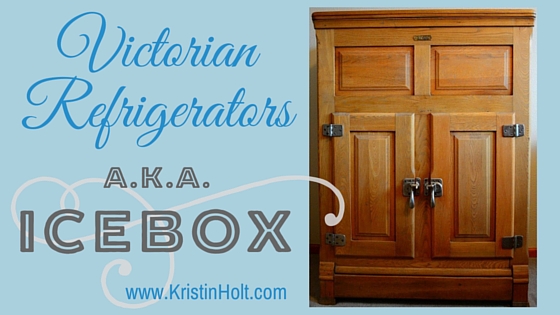
Our Victorian American ancestors were inventive people. They needed a solution for perishable food in the worst of summer’s heat (and beyond). They came up with a remarkably well-insulated icebox (officially called a refrigerator far earlier than you might guess), designed to be a beautiful piece of furniture and functional. Some iceboxes went so far as to serve the melted ice water by silver tap. This article contains Victorian instructions for care and cleaning of 19th century refrigerators, advertisements, a crime committed with an industrial-sized (believe it or not: a walk-in) refrigerator, current images of antique iceboxes (both family size and commercial size), the icebox’s impact on beer, and so much more.
by Kristin Holt | Aug 8, 2016 | Articles
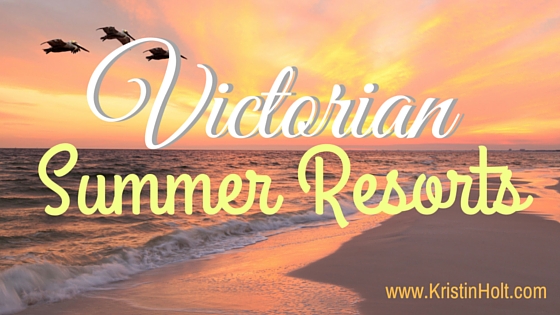
The Victorian Era drew to a close in January, 1901 with the death of Queen Victoria. The newspaper article I share within this post comes from July, 1902 (technically the Edwardian Era), but society’s expectations of table manners and propriety at a summer resort hadn’t changed. This article covers a few of the many, many “Summer Resorts” in the Victorian-Era United States and touches on why these resorts were so loved.
by Kristin Holt | Jul 21, 2016 | Articles
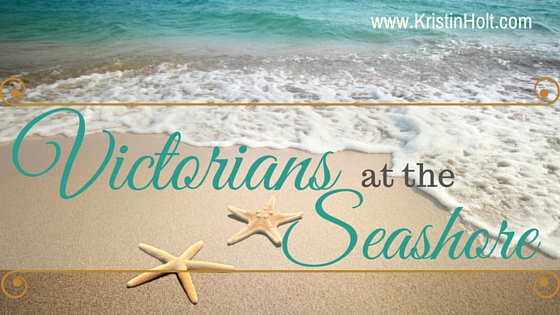
You’re likely familiar with Victorian-era “bathing costumes”–puffy dresses with pantaloons that still leave much to the imagination, thereby protecting the Victorian sense of propriety and decency. Inside this article, I share images of men’s bathing suits, attitudes (about bathing suits) expressed in United States newspapers of the day, and informative glimpses into a man’s view of a woman’s reasons for bathing in the sea before an audience…or not. A romantic tragedy on Coney Island in 1875 illustrates the dangers of the Victorian’s passion with immersing themselves in the sea.

by Kristin Holt | Jul 14, 2016 | Articles
Historic Silver City, Idaho, was once a bustling boom town with 2500 residents. The conjoined cemeteries tell many tales of the families who lived there. Many of the headstones (and footstones) are very legible and show a slice of Victorian American West life. I share images taken on a sunny day in June and provide the inscriptions from many of the markers. Come, walk through this historic cemetery with me and learn a little about the families who lived. #JacquieRogersAdo16
by Kristin Holt | Jun 14, 2016 | Articles
Victorian Americans not only observed Flag Day on June 14th–they created it. Flag poles on government property sported the star spangled banner. Private citizens raised the flag, draped patriotic bunting over porch rails and fences, and attended military parades. Most of all, they recalled what the American flag stands for, its symbolism, and the meaning of patriotism. The practice of observing Flag Day on June 14th, annually, had been in practice since the 1870s and become widespread, but it took well into the 20th century for a President of the United States to make the day a federal holiday.