by Kristin Holt | Jul 3, 2018 | Articles
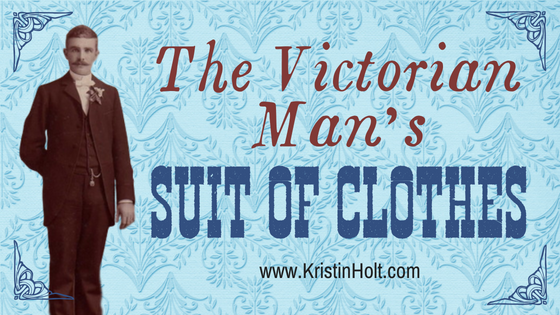
A man’s proper suit of clothes was worn by gentlemen, bankers, clerks, professionals… virtually every man except those who labored manually (such as miners). Given men owned so few items of clothing, they certainly wore what they had, despite the demand. Levi Strauss developed the original “Levi’s 201’s” and “Levi’s 501’s”, built to last in the clothing-destroying mines. Compare and contrast the “suit of clothes” with Levi’s originals.
by Kristin Holt | Jun 5, 2018 | Articles
One (unnamed) high-society New York City hostess started a fad that lasted fifty years…
The Calico Ball. Not only was the style of party highly fashionable, it also ensured help to those who needed it most.
by Kristin Holt | May 31, 2018 | Articles
A “Calico Ball”? Whoever heard of such a thing? Is it different than a debutante ball? A sock hop? A Leap-Year Ball? A Christmas Day Ball?
I’m impressed with the purpose behind a “calico ball”… especially because of where the fad began, and why.
by Kristin Holt | Nov 6, 2017 | Articles
This vintage newspaper article, printed in Washington, D.C. in 1881, speaks frankly of concerns a minister has in the way young people go about courtship. Compared to today’s parents’ and grandparents’ concerns, we might draw parallel (or direct) comparisons. Much has changed, and much stays the same.
by Kristin Holt | Apr 2, 2017 | Articles
PARALYZED BRIDEGROOM: A vintage newspaper article published on January 15, 1888 in The Sunday Leader of Wilkes-Barre, Pennsylvania, shows the superstitious nature of one (Kentucky) widower…and a very odd set of circumstances. Note that the article takes care to explain both the effected bridegroom and the new bride are frugal, hard-working, well-respected people of common sense. Amazing what a bit of folklore, threats from a dying first wife, and “the power of suggestion” can do.
by Kristin Holt | Mar 30, 2017 | Articles
A vintage newspaper article (123 years old), dated April 6, 1894, was published in a Hamburg, New York newspaper (The Sun and the Erie County Independent). Titled HOW TO ATTRACT MEN, the brief advice encapsulates the late Victorian-era’s social expectations for men and women–and sheds light on the etiquette of courtship…or how a woman might properly persuade a man to notice her (so a courtship might commence).

by Kristin Holt | Mar 6, 2017 | Articles
Really? Did Victorian Americans forbid kissing in public? Was it unreasonable to think the fictional town of Mountain Home, Colorado (the setting of The Gunsmith’s Bride (within GUNSMOKE & GINGHAM)) would have a “no kissing, no PDA” law? In 2017 U.S.A. it’s hard to believe Victorians would be so prudish as to object to public displays of affection–or a little peck. The newspaper articles, snippets from vintage magazines, and decorum advice from the era might leave you speechless… Oh! Read part of a scene where the law breaks up the hero and heroine (The Gunsmith’s Bride) kissing on the street–and threatens 48 hours in jail.
by Kristin Holt | Feb 28, 2017 | Articles
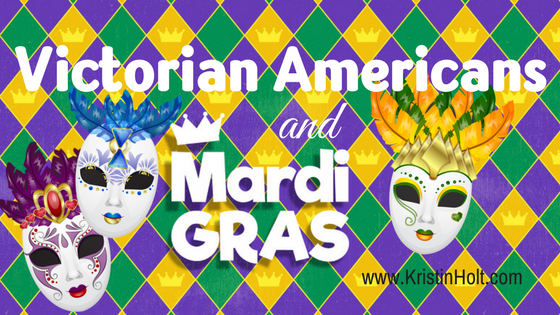
Victorian Americans loved their celebrations, holidays, and reasons to party. Mardi Gras, in North America, has been around since pre-American Revolutionary War. I share tidbits about the background of Mardi Gras, how it was celebrated during the staid and usually straight-laced Victorian era, and some of the challenges present to law enforcement in the latter half of the nineteenth century. Wow! I can only imagine!
by Kristin Holt | Feb 24, 2017 | Articles
Happy “Book Birthday” to Sophia’s Leap-Year Courtship! Brand new release, today, on every major eBook retail site. In celebration, I’m sharing what makes this title so different than other mail-order bride romances, AND a full scene from the middle of the book.
by Kristin Holt | Feb 21, 2017 | Articles
A bicycle built for two plays a role in my new release, Sophia’s Leap-Year Courtship. Such bicycles are romantic–and they’re making a resurgence. I see them in romantic bridal photography, all over Pinterest, and the research for the book showed me just when they were originally “a thing” and how they could fit into this book. Come see!